Best Heat-Resistant Tabletops for Hot Pot and KBBQ Tables (2026)
Sintered stone, compact laminate, quartz, granite, stainless and wood compared for hot pot and Korean BBQ tables: heat, stains, cutouts, weight and repair.
Short answer
For hot pot and Korean BBQ tables, sintered stone is the best all-round top: it tolerates heat near the burner, resists staining from chili oil and broth, and has near-zero porosity. Compact laminate is the best lighter, tougher-to-chip alternative. Keep quartz, natural stone and especially wood or veneer out of the immediate heat zone, and always use a trim ring at the cutout edge.
Simmer Table (a line by EASEN Commercial Furniture) builds hot pot and grill tables with all of these materials; this guide explains how we choose between them.
What does a hot pot tabletop have to survive?
A hot pot top faces a combination of stresses that ordinary dining tops never see together:
- Sustained heat around the cutout. Induction heats the pot, not the glass, but a pot of boiling broth sits on the unit for an hour or more, and the glass and the surrounding top warm up by conduction.
- Thermal shock. Cold plates of meat and iced drinks set down beside a hot zone, cold water used to wipe a warm top.
- Staining liquids. Chili oil, soy, sesame paste, and broths with turmeric or other strong pigments.
- Impact at the edge of the cutout. Pots are lifted out and dropped back in hundreds of times a week.
- Aggressive cleaning. Degreasers several times a day.
Korean BBQ adds radiant heat from a grill and fat spatter, which raises the bar again near the cutout.
How do the main tabletop materials compare?
| Material | Heat near burner | Stain resistance | Cutout behavior | Weight | Repairability | Typical role |
|---|---|---|---|---|---|---|
| Sintered stone (12 mm) | Very good | Excellent, near-zero porosity | Must be cut with radiused corners; brittle at sharp corners | Heavy | Chips hard to repair invisibly | First choice for heat zone |
| Compact laminate (12 mm solid phenolic) | Good | Very good | Tough; tolerates impact | Medium-heavy | Scratches can show; not refinishable | Lighter alternative, high-traffic |
| Quartz (engineered) | Moderate: resin binder can discolor or crack with direct heat | Very good | Cuts well | Heavy | Polishable | Use away from direct heat or with a wide trim ring |
| Granite | Good | Good if sealed | Cuts well | Heavy | Can be honed | Traditional; needs sealing |
| Marble | Moderate | Poor: etches and stains | Cuts well | Heavy | Can be honed | Avoid for hot pot |
| Stainless steel | Excellent | Excellent | Easy | Light | Scratches visible | Insert or full top for grills |
| HPL on board | Poor near heat | Good | Edges vulnerable to steam | Light | Not repairable | Away from heat only |
| Solid wood / veneer | Poor near heat | Poor to fair | Swells and lifts with steam | Light-medium | Refinishable | Frames and borders only |
"Sintered stone" here means large-format porcelain or mineral surfaces fired at very high temperatures, sold under many trade names. Thickness matters: 12 mm is the usual minimum for an unsupported dining top, and we often bond it to a backing panel for impact strength.
Why is sintered stone our default?
Three reasons, in order of importance:
- Stains. Chili oil is the stain that ends most hot pot tops. Sintered stone's very low water absorption means oil sits on the surface instead of wicking in, so it wipes off at the end of a sitting.
- Heat. It tolerates the temperatures found around an induction cutout far better than resin-bound quartz or laminate on board.
- Look. It is available in concrete, slate, marble-look and solid colors, so the same material works in a dark Sichuan room and a bright modern one.
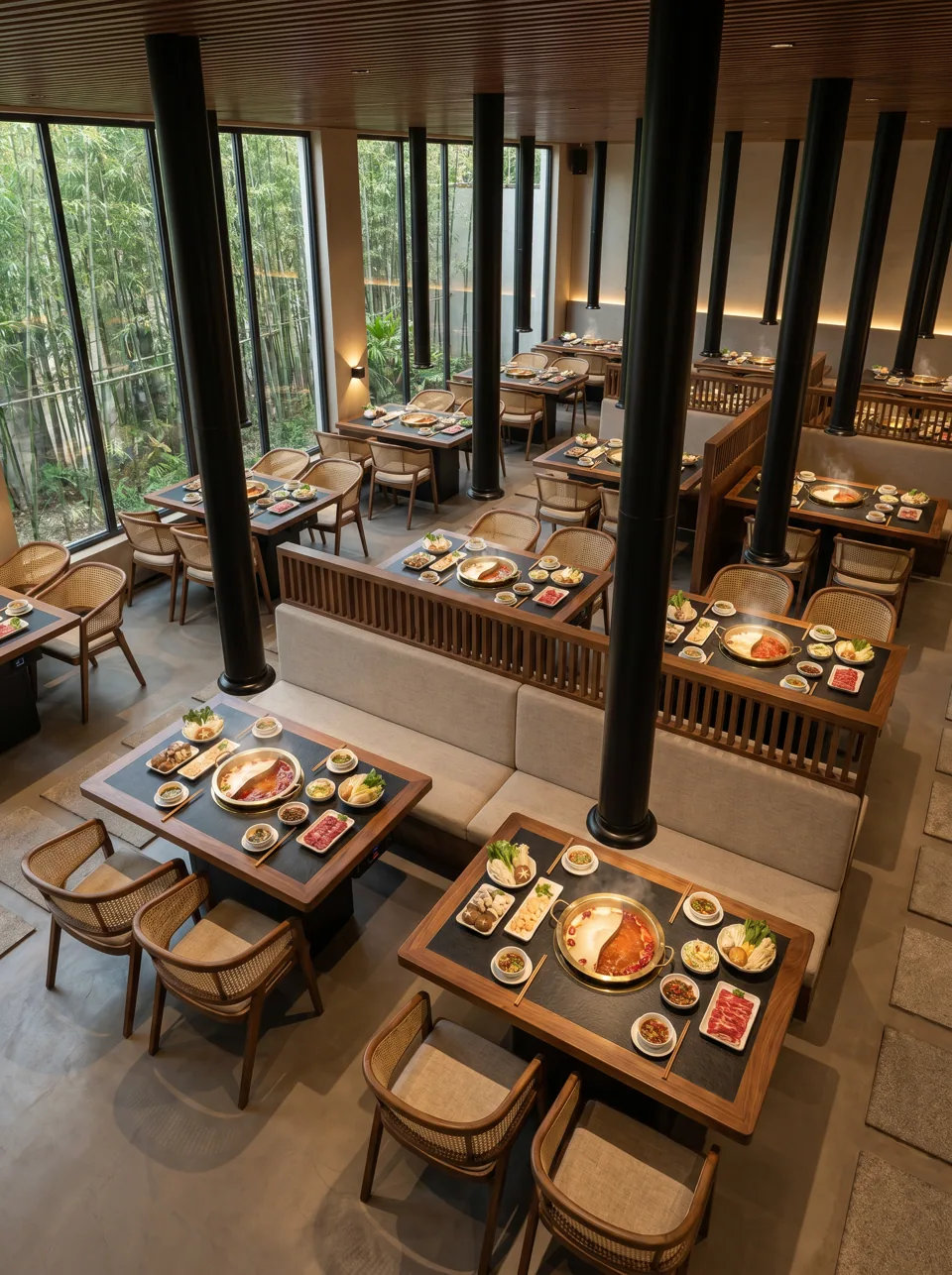
Its weakness is brittleness. Sharp inside corners and thin bridges between two cutouts are where it cracks, so we specify radiused corners, keep bridges wide and support the top on a full backing or a well-designed frame. Our Pale Stone Louvre Table is a typical sintered stone build.
When is compact laminate the better choice?
Compact laminate (solid phenolic, often 12 mm) is made from layers of resin-impregnated paper pressed into a solid sheet. It is lighter than stone, takes knocks without chipping, and its color runs right through, so edges can be left exposed. It suits:
- Fast-turn rooms where tables are moved often
- Individual-pot counters with many cutouts close together
- Projects where weight matters for shipping or upper floors
Its heat tolerance is good but lower than sintered stone, so we always use a metal trim ring at the cutout and keep the burner's hot glass from touching the laminate edge.
What about wood?
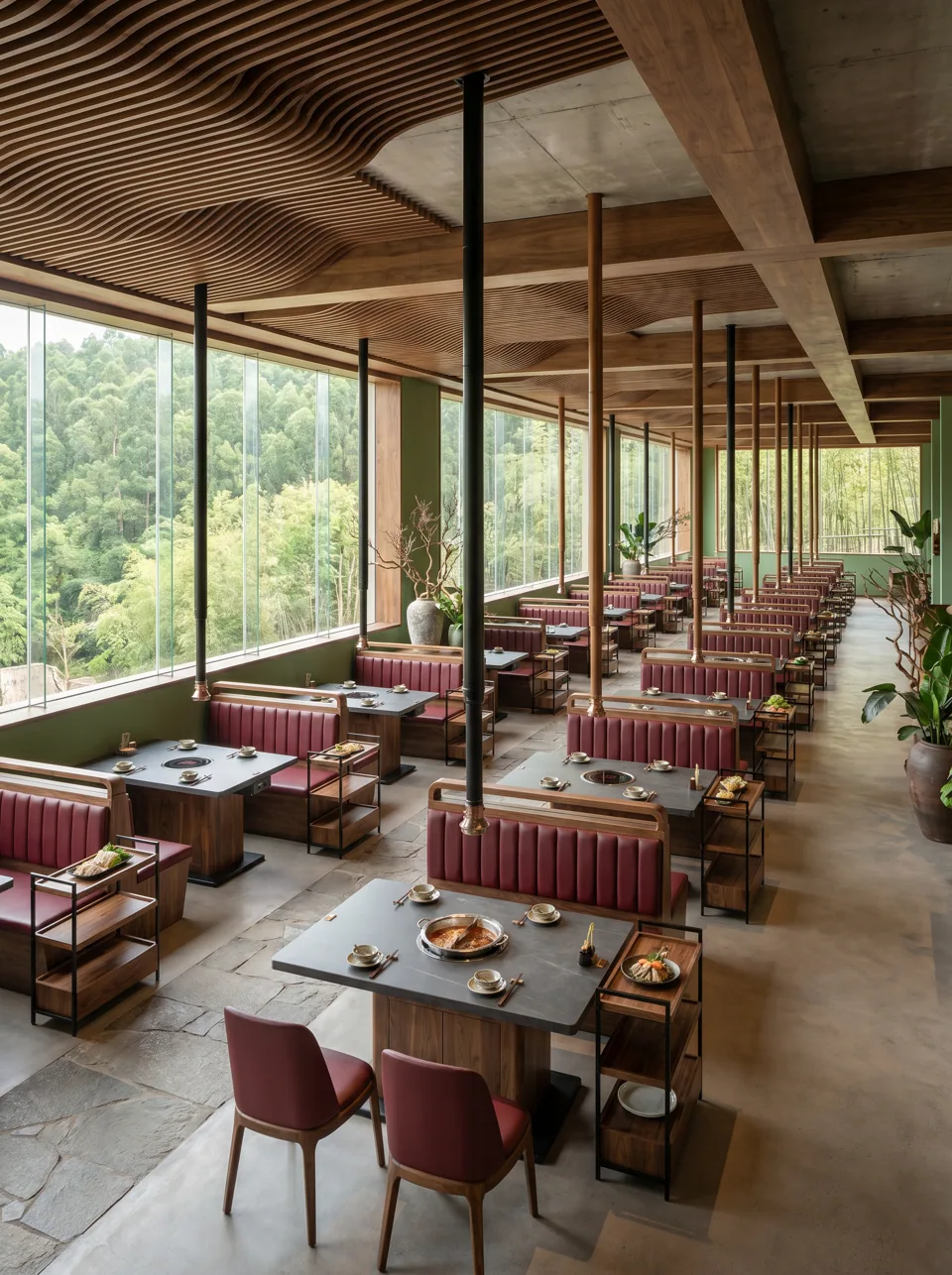
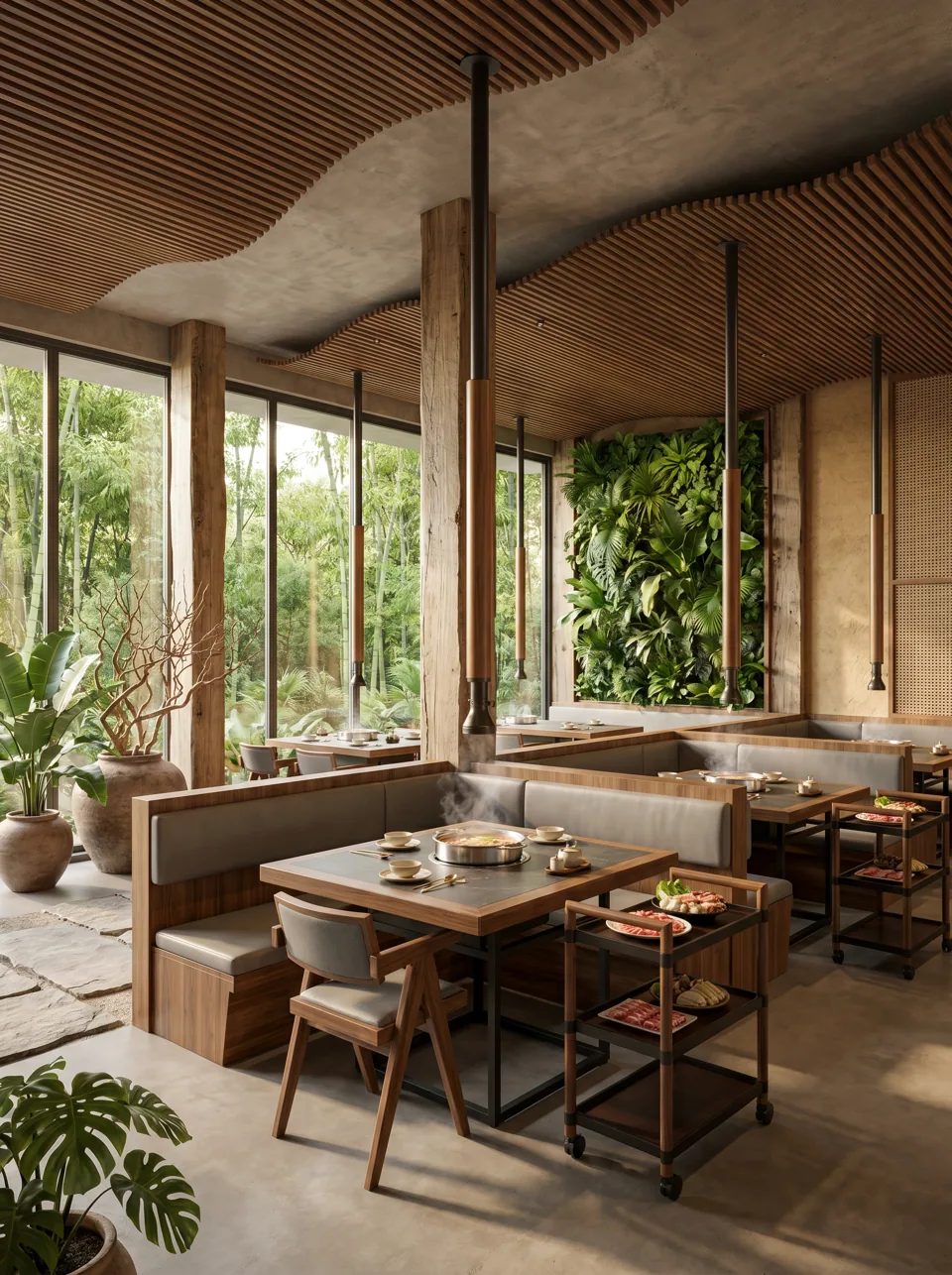
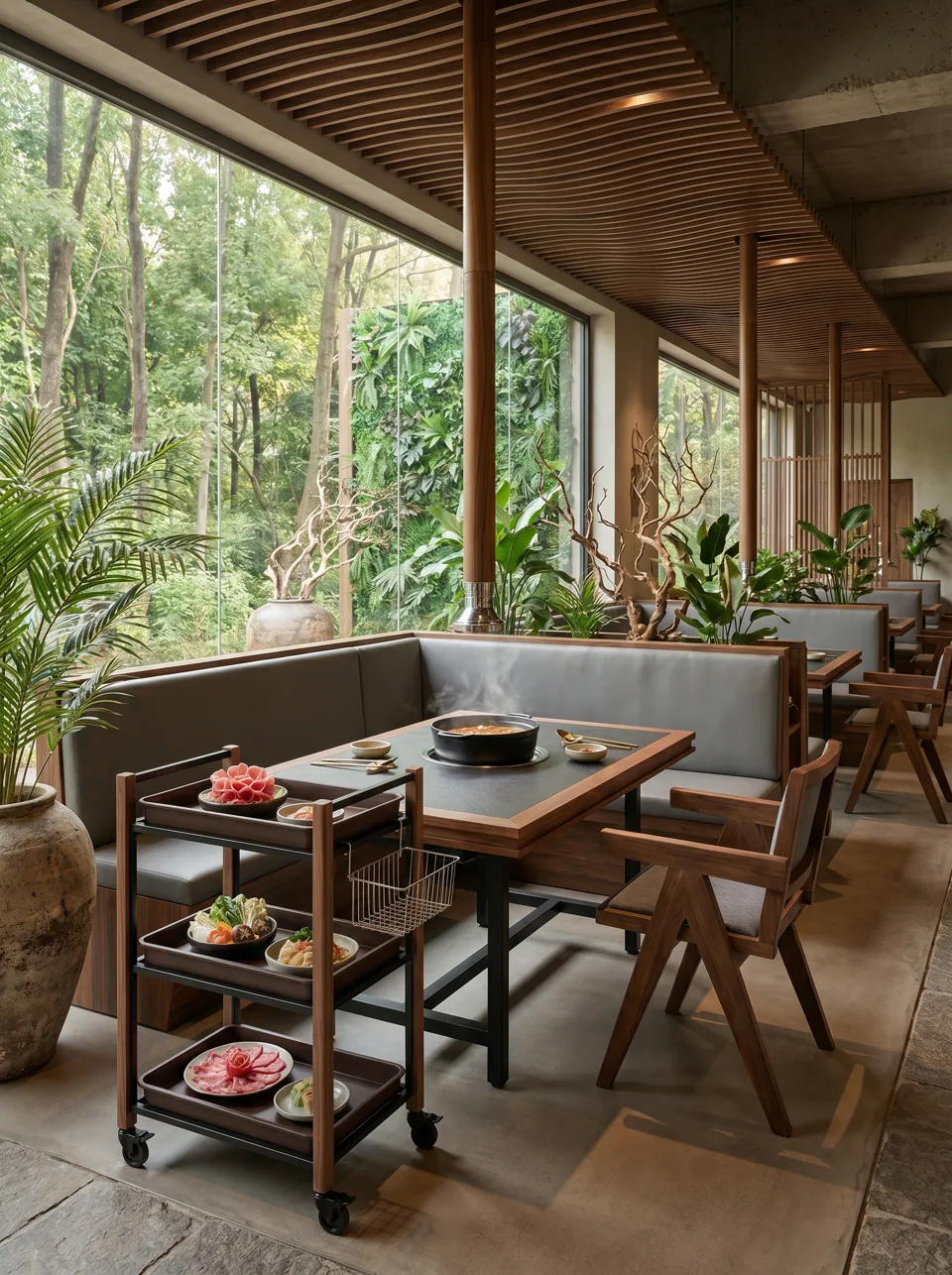
Guests love warm wood, and it belongs on a hot pot table, just not next to the pot. Steam from boiling broth lifts veneers and swells solid wood at a cutout edge within weeks. Our approach is a stone or laminate heat zone set into a solid hardwood frame, so the wood is where hands rest and the stone is where heat and liquid are. The Copper Flue Feast Table uses a wide wood border around a dark heat-zone center.
For banquet rounds without burners, a well-lacquered walnut or oak top is fine, and it is repairable in a way stone is not.
What edge and cutout details matter most?
- Trim ring. A stainless ring bridges the gap between the top and the burner glass, protects the cut edge and gives a clean wipe line.
- Radiused inside corners. Ask for a generous radius on any rectangular cutout in stone.
- Eased outer edges. A small radius or bevel on the table edge resists chipping when chairs or carts knock it.
- Sealed substrate. Any backing board or frame member exposed at the cutout should be sealed against steam.
- Drip edge. On wood-framed tops, a small groove under the edge stops liquid tracking back under the table.
Checklist: choosing a top for a hot pot or grill table
- Confirm the burner or grill model and its cutout and clearance requirements
- Pick the heat-zone material: sintered stone, compact laminate or stainless
- Decide whether wood will appear as a frame or border, and keep it outside the heat zone
- Choose a color that hides your cuisine's main stains (dark for chili oil, mid-grey for general use)
- Specify edge profile and trim ring finish
- Ask for a sample panel and test your own broth and sauces on it
- Check total table weight against your floor and your staff's ability to move tables
Common mistakes
- Marble for a Sichuan hot pot room. Chili oil and acidic sauces etch and stain it within a week.
- Quartz right up to the burner. The resin binder in engineered quartz can discolor or crack with direct, sustained heat.
- Square-cornered cutouts in stone. The corners crack first, often during shipping or installation.
- Two cutouts with a thin bridge between them. Keep a solid band of at least 4 in (10 cm) between cutouts in stone.
- Choosing by showroom look alone. Test a sample with your actual broth, oil and degreaser.
- Forgetting weight. A 32 x 63 in (80 x 160 cm) sintered stone top is heavy; plan for two-person handling and a base that can carry it.
FAQ
Is sintered stone heat-proof?
It is highly heat resistant, but no top should be treated as heat-proof. Thermal shock, such as a hot pot base set directly on a cold top, can crack any stone. Use the burner, trivets and trim rings as intended.
What color hides hot pot stains best?
Mid to dark greys and charcoal hide chili oil and broth marks best. Light tops look fresh but show residue until wiped; that is fine with sintered stone, which wipes clean, but it does demand discipline between sittings.
Can you match the tabletop to our existing interior?
Yes. We send stone and laminate samples for approval with the shop drawings, and the frame stain can be matched to your joinery.
Is stainless steel a good top for KBBQ?
It is excellent near the grill, but a full stainless top feels cold and industrial. Many KBBQ tables use a stainless insert around the grill with stone or laminate beyond it. See the Korean BBQ grill table collection for options.
How should staff clean a sintered stone top?
Wipe with warm water and a neutral or mild alkaline cleaner; degreasers are fine on the stone but follow the burner manufacturer's advice for the glass. Avoid abrasive pads on polished finishes.
Send your floor plan, seat count and burner or grill model. We reply with a layout suggestion and a quote, then shop drawings for approval.
Request a quote